Dalmatian
A large, short-coated, spotted dog with very high exercise needs, once a coach dog that ran beside horse-drawn carriages.
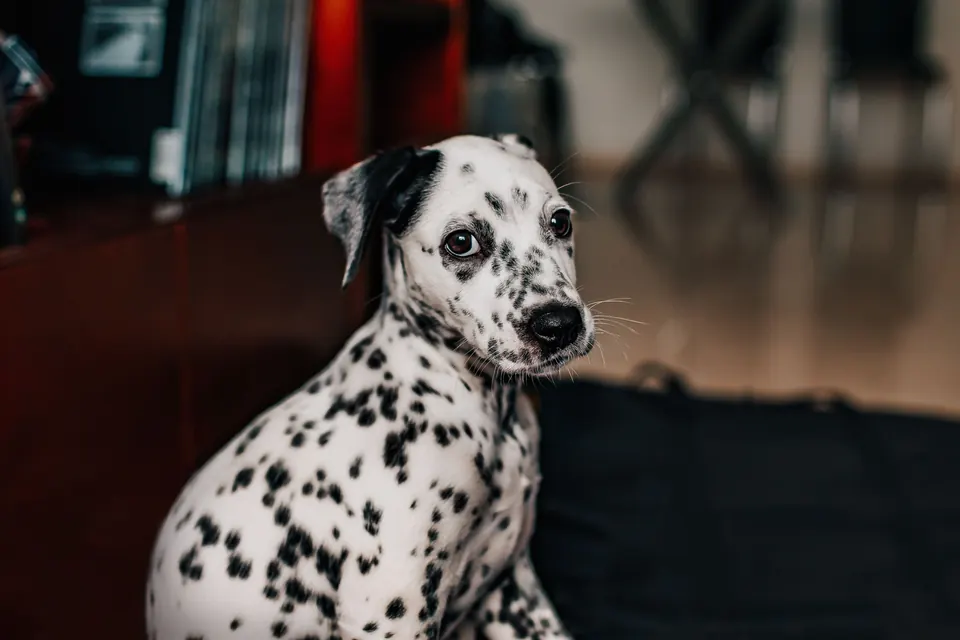
At a glance
- Kennel Club group
- Utility
- Size
- Large
- Height
- 56 to 61cm (PDSA)
- Weight
- 18 to 27kg (PDSA)
- Lifespan
- Over 12 years
- Exercise
- More than 2 hours a day
- Grooming
- Once a week
- Coat
- Short
- Sheds
- Yes, a lot
- Home
- A large house and garden; town or country
Temperament
PDSA describes Dalmatians as friendly, loyal, very active and lively. They can be strong-willed and need ongoing reward-based training; PDSA suggests first-time owners get help from an accredited trainer.
They need company and plenty to do, can become bored and destructive, and can develop separation anxiety, so shouldn't be left alone for more than four hours.
PDSA says Dalmatians can be friendly and good with children but are very high energy, so suit households with older children, and shouldn't be left unsupervised with children.
Exercise
At least two hours a day, in at least two walks, ideally with a chance to run somewhere secure, plus play, training and garden time.
Grooming
The coat is low maintenance, but Dalmatians shed heavily all year, most in spring and autumn. They're prone to skin allergies, and some shampoos can make them worse (PDSA).
Find a checked dog groomer near you · Your puppy’s first groom
Health
Problems Dalmatians can be prone to:
- Atopy (itchy skin)
- Bladder stones, linked to a gene that stops them processing uric acid
- Epilepsy
- Deafness
- Hip dysplasia
- Disproportional dwarfism
Tests The Royal Kennel Club recommends breeders do on the parents:
- DNA test for hyperuricosuria (HUU)
- Elbow scoring (BVA/Kennel Club scheme)
- Hearing test (Kennel Club BAER scheme, including litter screening)
- Hip scoring (BVA/Kennel Club scheme)
- DNA test for disproportional dwarfism
This isn’t veterinary advice: if you’re worried about your dog, talk to your vet.
Choosing a Dalmatian puppy
- PDSA recommends a Kennel Club Assured Breeder, who must do extra health tests, and checking the puppy and parents have had all the health checks.
In England, a puppy under six months can only be sold by the person who bred it (Lucy’s Law): buy from the breeder directly, or adopt. Breeders’ licences explained
Questions owners ask
How long do Dalmatians live?
Over 12 years. Every dog is different: a healthy weight and regular vet checks help.
How much exercise does a Dalmatian need?
More than 2 hours a day. At least two hours a day, in at least two walks, ideally with a chance to run somewhere secure, plus play, training and garden time.
How often should a Dalmatian be groomed?
Once a week. The coat is low maintenance, but Dalmatians shed heavily all year, most in spring and autumn. They're prone to skin allergies, and some shampoos can make them worse (PDSA).
Do Dalmatians shed?
Yes, a lot.
How big do Dalmatians get?
Height: 56 to 61cm (PDSA). Weight: 18 to 27kg (PDSA).
Are Dalmatians good family dogs?
PDSA says Dalmatians can be friendly and good with children but are very high energy, so suit households with older children, and shouldn't be left unsupervised with children.
Where this comes from
Checked against these on 6 November 2026. Every dog is an individual: these are typical figures for the breed.