Pug
A small, affectionate companion dog with a flat face, which needs careful watching for breathing, skin and weight.
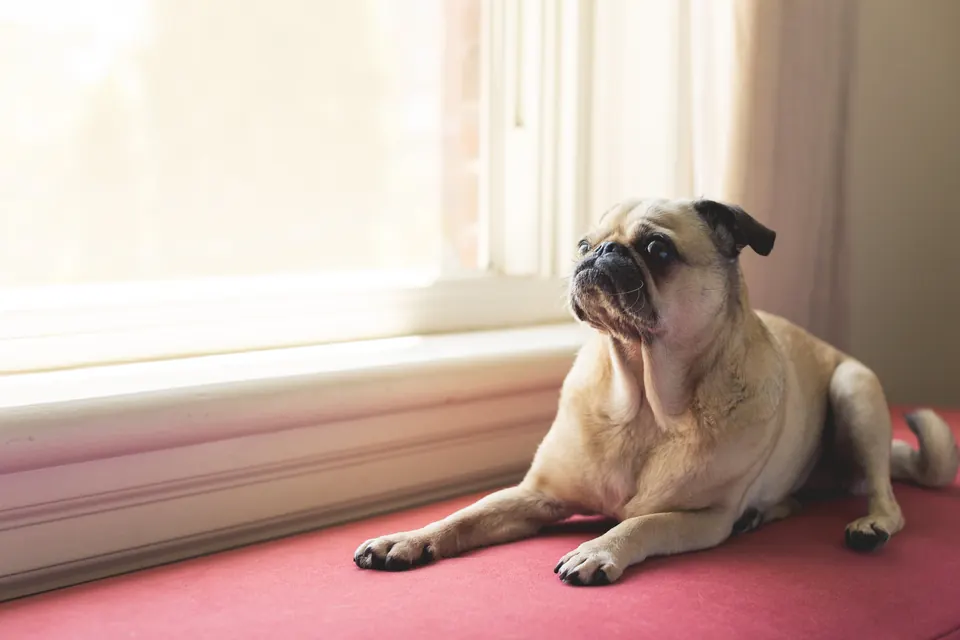
At a glance
- Kennel Club group
- Toy
- Size
- Small
- Height
- 25 to 33cm (PDSA)
- Weight
- 6 to 8kg (PDSA, Battersea)
- Lifespan
- Over 10 years (Kennel Club, PDSA); 7 to 9 years (Battersea)
- Exercise
- Up to 1 hour a day
- Grooming
- At least once a week
- Coat
- Short
- Sheds
- Yes, a lot for a short coat
- Home
- A flat or house with a small or medium garden; town or country
Temperament
The Kennel Club describes Pugs as affectionate, sociable companions that thrive on human company, usually friendly with strangers and other pets.
They're intelligent but can be strong-willed, so training is slower and reward-based methods work best. They dislike being left alone for long and can be prone to separation anxiety.
The Kennel Club says Pugs are typically affectionate and playful, and their sturdy build makes them popular with families, with young children supervised. Battersea says they can suit first-time owners who are genuinely ready for the medical side.
Exercise
Up to an hour a day, in shorter walks with play. They tire easily because of their breathing, and should never exercise in the heat (PDSA, Kennel Club).
Grooming
Brush at least once a week, and dry the skin folds straight after bathing. Short as it is, the coat sheds a lot (PDSA).
Find a checked dog groomer near you · Your puppy’s first groom
Health
Problems Pugs can be prone to:
- Brachycephalic obstructive airway syndrome (BOAS)
- Eye problems: dry eye, corneal ulcers, entropion and ectropion
- Skin fold infections
- Luxating patellas
- Pug dog encephalitis (PDE)
- Hemivertebrae
- Elbow and hip dysplasia
- Legg-Perthes disease
- Hypothyroidism
The Royal Kennel Club asks breeders to do these tests on the parents, as a minimum:
- Breathing test for BOAS (Kennel Club Respiratory Function Grading)
- Eye testing (BVA/Kennel Club/ISDS eye scheme)
This isn’t veterinary advice: if you’re worried about your dog, talk to your vet.
Choosing a Pug puppy
- PDSA says to look for a puppy with nice open nostrils, no noise when breathing, a visible tail that isn't corkscrewed, and skin folds that pull back to show healthy skin.
- Check the parents have had the relevant health screening.
- The Kennel Club won't register merle Pugs.
In England, a puppy under six months can only be sold by the person who bred it (Lucy’s Law): buy from the breeder directly, or adopt. Breeders’ licences explained
Questions owners ask
How long do Pugs live?
Over 10 years (Kennel Club, PDSA); 7 to 9 years (Battersea). Every dog is different: a healthy weight and regular vet checks help.
How much exercise does a Pug need?
Up to 1 hour a day. Up to an hour a day, in shorter walks with play. They tire easily because of their breathing, and should never exercise in the heat (PDSA, Kennel Club).
How often should a Pug be groomed?
At least once a week. Brush at least once a week, and dry the skin folds straight after bathing. Short as it is, the coat sheds a lot (PDSA).
Do Pugs shed?
Yes, a lot for a short coat.
How big do Pugs get?
Height: 25 to 33cm (PDSA). Weight: 6 to 8kg (PDSA, Battersea).
Are Pugs good family dogs?
The Kennel Club says Pugs are typically affectionate and playful, and their sturdy build makes them popular with families, with young children supervised. Battersea says they can suit first-time owners who are genuinely ready for the medical side.
Where this comes from
Checked against these on 6 November 2026. Every dog is an individual: these are typical figures for the breed.