Cavalier King Charles Spaniel
A small, affectionate spaniel that loves company, suits family homes, and needs daily brushing and at least an hour of exercise a day.
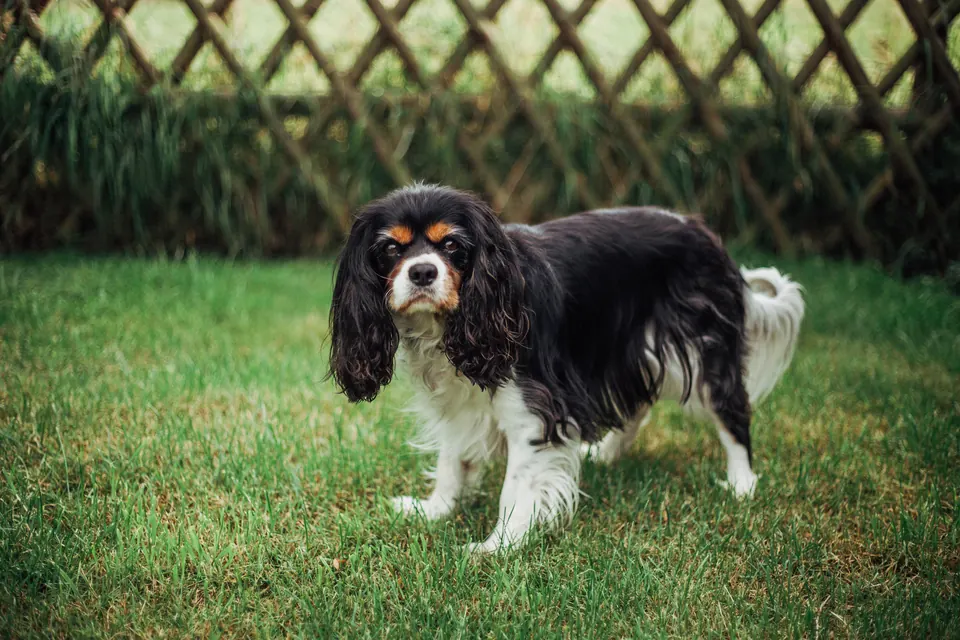
At a glance
- Kennel Club group
- Toy
- Size
- Small
- Height
- 30 to 33cm (PDSA)
- Weight
- 5.4 to 8.2kg (PDSA)
- Lifespan
- Over 12 years
- Exercise
- Up to 1 hour a day (Kennel Club); at least 1 hour (PDSA)
- Grooming
- More than once a week (Kennel Club); daily (PDSA)
- Coat
- Medium
- Sheds
- Yes
- Home
- A flat or house with a small or medium garden; town or country
Temperament
PDSA describes Cavaliers as kind, gentle and loyal, popular for their size and love of people. They're eager to please and fairly easy to train with reward-based methods.
They hate being left alone and can develop separation anxiety: PDSA advises never leaving them for more than four hours. They're playful, have some prey drive, and usually bark when someone new comes to the door.
PDSA says Cavaliers make great family pets if well socialised young, with supervision around children, and that they need someone around most of the time.
Exercise
At least an hour a day, ideally over two walks, with off-lead time somewhere secure, plus play and training. PDSA says they often do well at agility.
Grooming
Brush daily to stop matting, more in spring and autumn, and expect a professional groom a few times a year (PDSA).
Find a checked dog groomer near you · Your puppy’s first groom
Health
Problems Cavalier King Charles Spaniels can be prone to:
- Mitral valve disease (heart): PDSA calls it a big problem for the breed
- Chiari malformation and syringomyelia (CM/SM)
- Inherited eye conditions, including cataracts and retinal dysplasia
- Curly coat/dry eye syndrome
- Episodic falling
- Luxating patellas, ear problems and bad teeth
The Royal Kennel Club asks breeders to do these tests on the parents, as a minimum:
- DNA test for curly coat/dry eye
- DNA test for episodic falling
- Heart grading for mitral valve disease (Kennel Club heart scheme)
This isn’t veterinary advice: if you’re worried about your dog, talk to your vet.
Choosing a Cavalier King Charles Spaniel puppy
- PDSA recommends a Kennel Club Assured Breeder, as they meet extra requirements including health screening.
- Ask about the medical history of the puppy's parents and grandparents.
In England, a puppy under six months can only be sold by the person who bred it (Lucy’s Law): buy from the breeder directly, or adopt. Breeders’ licences explained
Questions owners ask
How long do Cavalier King Charles Spaniels live?
Over 12 years. Every dog is different: a healthy weight and regular vet checks help.
How much exercise does a Cavalier King Charles Spaniel need?
Up to 1 hour a day (Kennel Club); at least 1 hour (PDSA). At least an hour a day, ideally over two walks, with off-lead time somewhere secure, plus play and training. PDSA says they often do well at agility.
How often should a Cavalier King Charles Spaniel be groomed?
More than once a week (Kennel Club); daily (PDSA). Brush daily to stop matting, more in spring and autumn, and expect a professional groom a few times a year (PDSA).
Do Cavalier King Charles Spaniels shed?
Yes.
How big do Cavalier King Charles Spaniels get?
Height: 30 to 33cm (PDSA). Weight: 5.4 to 8.2kg (PDSA).
Are Cavalier King Charles Spaniels good family dogs?
PDSA says Cavaliers make great family pets if well socialised young, with supervision around children, and that they need someone around most of the time.
Where this comes from
Checked against these on 6 November 2026. Every dog is an individual: these are typical figures for the breed.