Great Dane
A giant, gentle working dog that's loyal and playful at home, but needs a large house, a big garden and at least two hours of exercise a day.
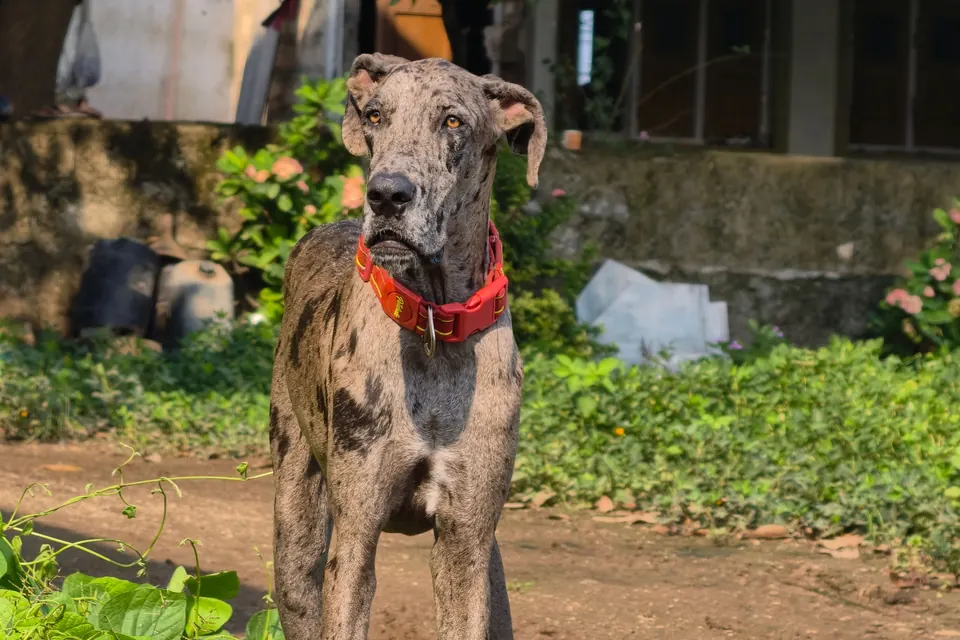
At a glance
- Kennel Club group
- Working
- Size
- Extra large (Kennel Club)
- Height
- 71 to 76cm (PDSA)
- Weight
- 46 to 54kg (PDSA)
- Lifespan
- Under 10 years
- Exercise
- More than 2 hours a day
- Grooming
- Once a week
- Coat
- Short
- Sheds
- Yes, but fairly little (PDSA)
- Home
- A large house and garden; PDSA says they suit the countryside, not flats
Temperament
Great Danes are gentle, loving giants who bond closely with their families and aren't known for being aggressive. They're intelligent and quick to learn but can be strong-willed, so early, consistent reward-based training helps.
They're sensitive and can find new situations hard, so wide socialisation from a young age matters. They may not cope well being left alone and can chew when bored (PDSA).
The Kennel Club says the Great Dane makes a wonderful family dog. PDSA says they suit active households, but wouldn't recommend one with younger children because of their size and strength.
Exercise
At least two hours a day, spread across the day: walks and off-lead exercise somewhere secure, plus garden time and training.
Too much exercise too young can harm a puppy's bones and joints (PDSA).
Grooming
A weekly brush is more than enough; they may shed more in spring and autumn. They drool, so keep a cloth handy (PDSA).
Find a checked dog groomer near you · Your puppy’s first groom
Health
Problems Great Danes can be prone to:
- Gastric dilatation volvulus (bloat), an emergency
- Hip and elbow dysplasia
- Dilated cardiomyopathy
- Eye problems including entropion, ectropion, glaucoma and cherry eye
- Wobbler syndrome
- Certain cancers
- Inherited myopathy of Great Danes (a muscle-wasting disease)
Tests The Royal Kennel Club recommends breeders do on the parents:
- DNA test for inherited myopathy (IMGD)
- Elbow scoring (BVA/Kennel Club scheme)
- Eye testing (BVA/Kennel Club/ISDS eye scheme)
- Hip scoring (BVA/Kennel Club scheme)
This isn’t veterinary advice: if you’re worried about your dog, talk to your vet.
Choosing a Great Dane puppy
- Ask for the parents' health screening results.
- PDSA recommends a Kennel Club Assured Breeder, who must do extra health tests, and warns unusually cheap puppies may come from a puppy farm.
- PDSA suggests an adult from a rescue centre as an option: good rescues tell you about any health or behaviour problems.
In England, a puppy under six months can only be sold by the person who bred it (Lucy’s Law): buy from the breeder directly, or adopt. Breeders’ licences explained
Questions owners ask
How long do Great Danes live?
Under 10 years. Every dog is different: a healthy weight and regular vet checks help.
How much exercise does a Great Dane need?
More than 2 hours a day. At least two hours a day, spread across the day: walks and off-lead exercise somewhere secure, plus garden time and training.
How often should a Great Dane be groomed?
Once a week. A weekly brush is more than enough; they may shed more in spring and autumn. They drool, so keep a cloth handy (PDSA).
Do Great Danes shed?
Yes, but fairly little (PDSA).
How big do Great Danes get?
Height: 71 to 76cm (PDSA). Weight: 46 to 54kg (PDSA).
Are Great Danes good family dogs?
The Kennel Club says the Great Dane makes a wonderful family dog. PDSA says they suit active households, but wouldn't recommend one with younger children because of their size and strength.
Where this comes from
Checked against these on 6 November 2026. Every dog is an individual: these are typical figures for the breed.